Constitutional Respect vs Politial Loyalty: Where is the Line for the Cabinet?
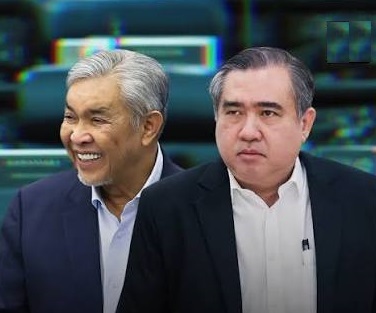
An Open Letter to the Malaysian Public and Our Elected Representatives
The recent political theatre surrounding the conditional pardon of former Prime Minister Najib Razak has exposed not just a rift in our coalition, but a fundamental misunderstanding of our Federal Constitution and a troubling erosion of executive accountability. As the nation watches Minister Anthony Loke’s resignation and the subsequent defense of it by Umno leaders, we must look past the partisan noise and examine the constitutional and democratic principles at stake.
The core of this controversy rests on a simple, yet often ignored, constitutional truth: The power to grant pardons is the absolute prerogative of the Yang di-Pertuan Agong, not the Cabinet.
Misplaced Principle
When Anthony Loke announced his resignation, he framed it as a stand on "principle." However, as Foreign Minister Mohamad Hasan rightly pointed out, this is a misapplication of political principle. A minister resigns on principle when they cannot defend a Cabinet decision. They do not resign because they disagree with the sovereign’s exercise of constitutional discretion.
Article 42 of the Federal Constitution is clear. The pardon of Najib Razak was not a policy debate; it was the exercise of royal prerogative. By resigning over this, Loke inadvertently stepped into the dangerous territory of questioning the Agong’s authority. This is not a matter of left or right, or DAP or Umno. It is a matter of respecting the structure of our monarchy.
The irony here is palpable. Umno President Ahmad Zahid Hamidi praised Loke as a "man of principle." This praise is contradictory. If Loke is a man of principle for resigning over a royal pardon, then Zahid is simultaneously arguing that citizens must not challenge that same pardon. You cannot have it both ways. You cannot applaud a minister for taking a stand against the Agong’s decision while simultaneously warning the public that such a stand is "disloyalty."
The Real Principle Zahid Ignores
If we are truly discussing principles, we must look closer to home within the Cabinet itself. Gobind Singh Deo was spot on when he called for Zahid Hamidi’s resignation. This is not about the pardon. This is about collective ministerial responsibility.
In any parliamentary democracy, a minister’s primary duty is to support the Prime Minister and defend Cabinet policies. Zahid Hamidi, as Deputy Prime Minister, has repeatedly publicly attacked Anwar Ibrahim, questioned his administrative competence, and even suggested dissolving Parliament. This is not "healthy debate"; it is insubordination.
When a Deputy Prime Minister attacks the Prime Minister’s leadership, he forfeits the right to remain in that position. The principle of collective responsibility demands unity. By refusing to dismiss Zahid, Prime Minister Anwar Ibrahim is not showing tolerance; he is showing weakness. He is allowing a senior minister to undermine the executive branch’s credibility on the world stage and at home.
The Surreal Silence
What makes this moment so surreal is the Prime Minister’s own attitude. Anwar Ibrahim, the man who campaigned on reform and integrity, seems bewildered by the open hostility from within his own coalition. His unwillingness to dismiss Umno ministers who openly attack him is bizarre. It sends a message that disloyalty has no consequence.
How much humiliation must the Prime Minister endure? How long can the government function when its Deputy PM treats the Prime Minister’s authority as optional? The public expects the PM to lead, not to be a punching bag for coalition bargaining chips.
What the Public Must Understand
1. Resigning over a pardon is not a principled stand. It is a constitutional misstep. We must respect the Agong’s prerogative, even if we disagree with it. The correct channel for dissent is political critique, not ministerial resignation that implies a challenge to the monarchy.
2. Ministers who attack the PM should resign. This is the bedrock of parliamentary democracy. If Zahid Hamidi cannot defend Anwar Ibrahim, he should not be his Deputy. Period.
3. The PM must act. Anwar Ibrahim’s tolerance is being mistaken for indecision. The public deserves a government that speaks with one voice, not one that is visibly fractured.
The pardon of Najib Razak is a done deal, legally and constitutionally. The issue now is not whether we like it, but whether we respect the system that allowed it. And more importantly, whether we respect the system enough to hold our elected leaders accountable for their conduct within that system.
To the politicians: Stop playing constitutional games to score partisan points. Respect the Agong’s role. Respect the Cabinet’s responsibility. And, Prime Minister Anwar, please respect your own office enough to clean house.
The people are watching. Not just at the pardon, but at the principles you claim to uphold while ignoring the ones that actually matter.
A Concerned Citizen